Strike-off — the process of formally closing a company in Singapore — is often seen as simple. For many companies, it is. But for companies with any operational history, the process carries more risk than directors expect.
ACRA’s strike-off framework relies on self-declaration. Directors confirm the company has no outstanding liabilities, no pending proceedings, and no unresolved matters with government agencies. The accuracy of that declaration rests entirely with the director.
Below are common oversights that come up regularly.
Closing the Bank Account Too Early
Directors sometimes assume a tax refund or security deposit can be redirected to a shareholder once the company is dissolved. IRAS does not remit money owed to a dissolved company to an individual, even a former director or shareholder. The only remedy at that point is a company restoration, which is slow and costly.
Leaving Out Loans
This includes money owed by the company, money owed to directors or shareholders, and loans the company made to third parties. Uncollectible debts need proper assessment and documentation. Leaving them out of the declaration is not the same as resolving them.
Declaring a Clean Balance Sheet That Is Not Clean
Loan balances, deposits, receivables, intercompany balances, and contingent liabilities sometimes still exist when a company files for strike-off. Management accounts get prepared to show a clean position, but the underlying figures often go unchecked.
Writing Off Director Loans Without Considering Tax
A director’s loan written off as an expense usually creates a non-deductible trade loss for the company. The director may also be required to declare this as a personal benefit in his tax return. This step is frequently missed.
Overlooking Contracts, Guarantees, and Warranties
Obligations under existing contracts, guarantees, or warranties can survive a strike-off application. So can legal claims that have not yet been filed but are reasonably foreseeable.
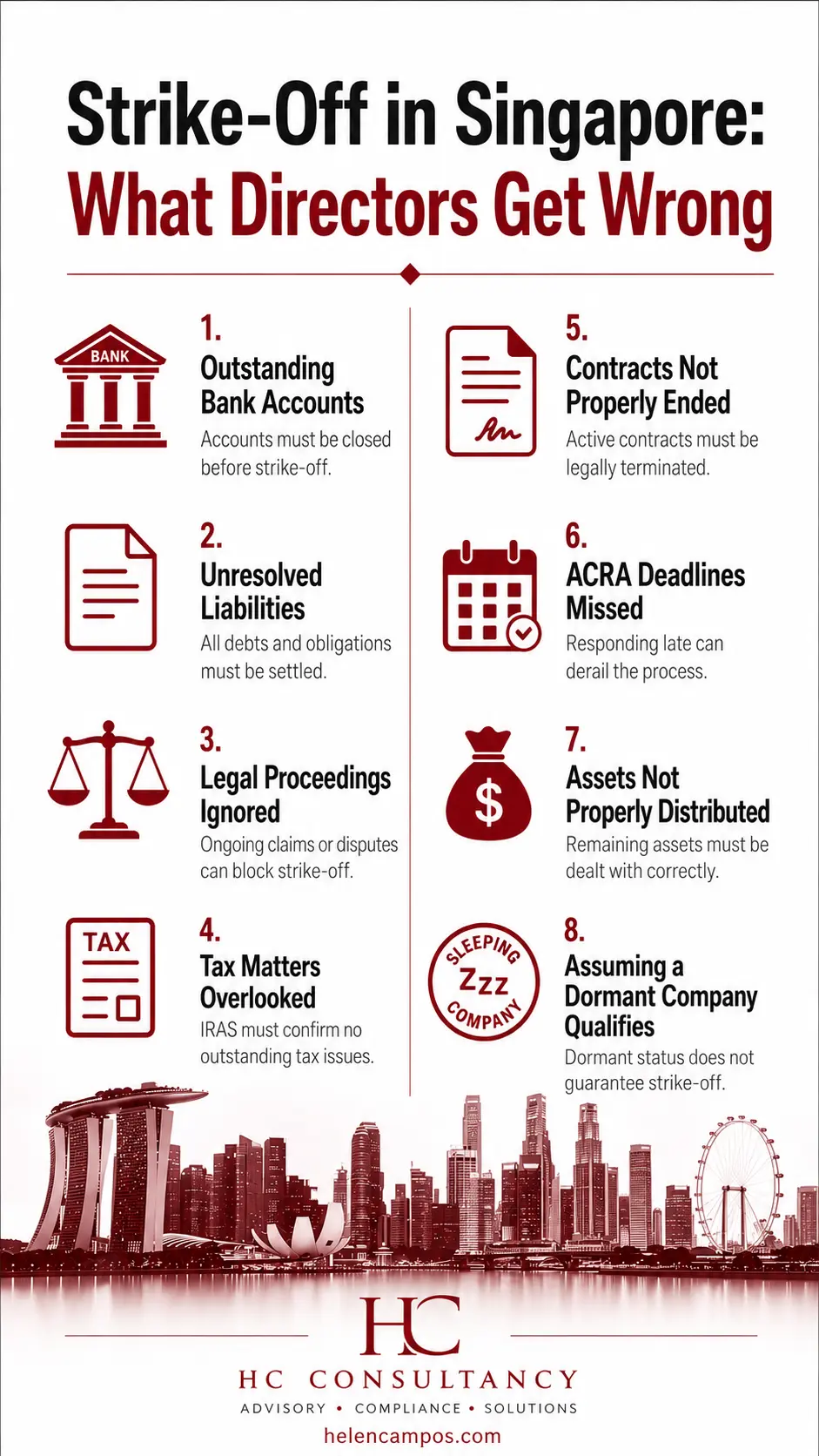
Filing Before Annual Returns Are Complete
All annual returns and other regulatory filings need to be current before a strike-off application goes in.
Distributing Assets Without Records
Assets and funds sometimes get distributed informally before dissolution, without documentation of how or to whom. This becomes difficult to account for later, particularly if questions arise after the company is struck off.
Assuming Dormant Means No Liabilities
A dormant company can still carry obligations — professional fees, taxes, penalties, or regulatory dues. Dormancy is not the same as a clean slate.
Getting the Strike-Off Right
ACRA’s framework places the burden of accuracy on directors and shareholders. Before filing for strike-off, the disclosures around assets, liabilities, loans, receivables, and the company’s financial position need to be complete and correct. Incorrect or misleading information can lead to objections, delays, regulatory scrutiny, and in some cases, personal exposure for the people who made the declaration.
A strike-off should close a company cleanly. Getting the disclosures right the first time is what makes that possible.
Planning to Close a Company?
If you are planning to close a company with any operational history, it is worth having the disclosures reviewed before the application is filed. HC Consultancy advises directors and shareholders through this process, particularly where loans, contracts, or financial positions need a closer look. Reach out if this is something you are working through.